Menu

Pidgeons's ProjectsA Selection of News Articles Related to Pidgeon's Projects

April 1950

The Importance of the Smaller Towns

Addressing this year’s Manor Court ceremony at Bideford, the Recorder of Bideford, Mr W B Faraday, spoke of the important contribution made to the nation by small boroughs and, referring to the possibility of Bideford, with other similar towns, losing the privilege of Quarter Sessions, said it seemed to him a queer reason to take such a privilege away from a place simply because it was well behaved and there were few cases.

Introducing the Recorder, the Mayor of Bideford, Cllr A K Chope, said the Justices of Peace Act would have the effect of bringing to an end their local Borough Bench and Quarter Sessions, but loopholes had been left in the Act by which they hoped that towns like Bideford and Barnstaple would retain these offices. It happened that that day was the last upon which any such appeal could be made. Bideford’s appeal had been made some time ago.

The Recorder spoke of the concern felt for the problems arising from the spread of great...

Read More

April 1925

Interesting Function

Those who were privileged to be present at the three hours’ proceedings in connection with the holding of Bideford Manor Court and the subsequent luncheon to which the Mayor entertained a very representative gathering, heard much suggestive matter on a variety of subjects of interest to Bidefordians old and new.

Sunday observance is a subject which has of late been exercising thoughtful people seriously, but it is no new question as far as the interest of Bidefordians is concerned, as is shown by an old petition to parliament which has come into the hands of Councillor H W Huxham and which he had kindly presented to the Lords of the Manor for preservation in the Museum. The Petition, on parchment, and with the original signatures, bears no date, but the name of its origin is sufficiently fixed by the signature of the late Mr W Tardrew as Mayor, for he was Chief Magistrate of the Borough in 1828 and again in 1833. Many will read the names of the other signatories...

Read More

Voluntary institution

1924

A Commanding site in Abbotsham Road
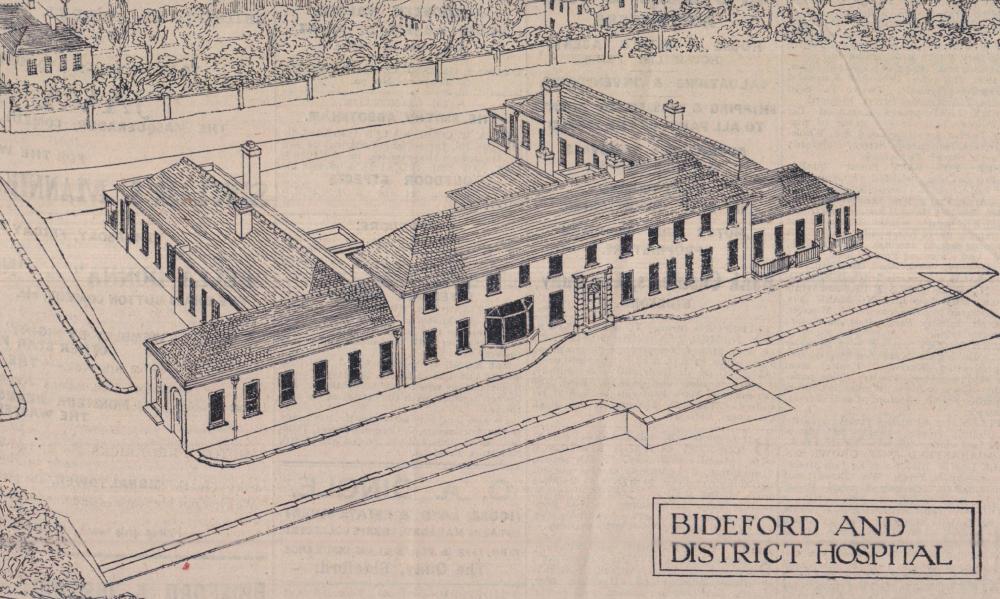
25.11.1924 Bdeford Hospital

In April 1924 it was announced that a meeting of the General Management Committee fo the Bideford and District Hospital has been held in connection with the steps being taken for the building of a new Hospital. The option of re-modelling and enlarging the present site was found to be ‘excessive commensurate with the result.’ This scheme was abandoned and the Committee was ‘more and more convinced after the years of consideration given to the subject that the erection of a new Hospital on a more suitable site would meet with greater public approval and support.’ The Committee was able to avail themselves of the voluntary assistance of expert help. “Three sets of plans and estimates were examined, and those of Mr H Dighton Pearson, of Gower Street, London – a brother of Dr Ellis Pearson – were regarded as so entirely in accord with the conditions laid down, and the requirements sought, as to render it unnecessary to incur the expense of proceeding

...
Read More

Windmill Lane

By Sarah Chappell

Why is the road named Windmill Lane?

When I first visited the community archive in Windmill Lane to see the archivist Mrs Pat Slade, this was the first question that I asked. It was also the request of my partner, who tolerates my interest in old things. Mrs Slade advised that the reason was that a windmill could be seen from the lane. The map of 1936 lodged at the archive indicates the position of the windmill and indeed the stump of the tower remain in situ north of Bidna Lane but is very difficult to see from the public highway. The current O. S map still indicates the remains of a windmill at Bidna.
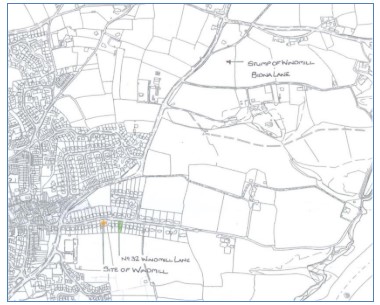
Fig 1 Windmills

Figure 1- Map of Northam and Appledore parishes showing the location of the windmills

The fact the road is called Windmill Lane because of a view of a windmill seemed a little unlikely. The lane has always been shown as Windmill Lane on the O.S. Maps dating from 1932.
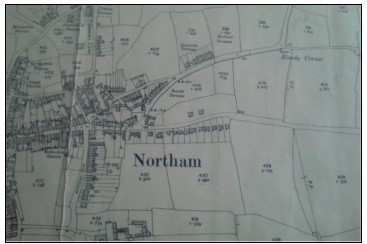
Fig 2 Windmills

Figure 2- O.S extract from 1930 showing development on the site of the Windmill Lane windmill site.(NCA)

A visit to

...
Read More

Thomas Tedrake

48 Mill Street

Thomas Tedrake

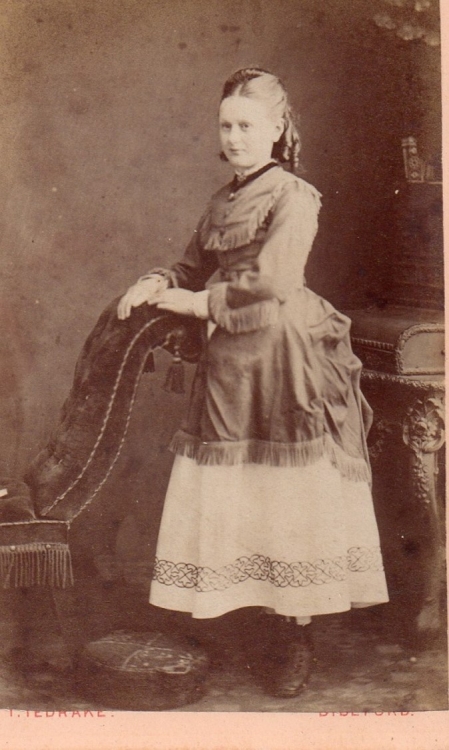
Forty-eight Mill Street, Bideford, was home to Thomas Tedrake from 1863 to about 1908, as well as being his newspaper office with printing press. His wife also ran a shop there.
He was a man with many interests: he opened a photographic studio in Bideford and also published a guidebook to the area as well as running his own newspaper for many years. He was active on the Town Council for decades and, if he needed a hobby, it must have been issuing and receiving court summons' of which there were many!
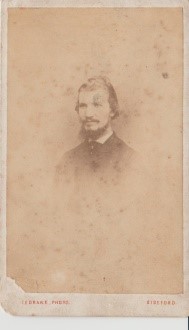
Thomas Tedrake Bideford1

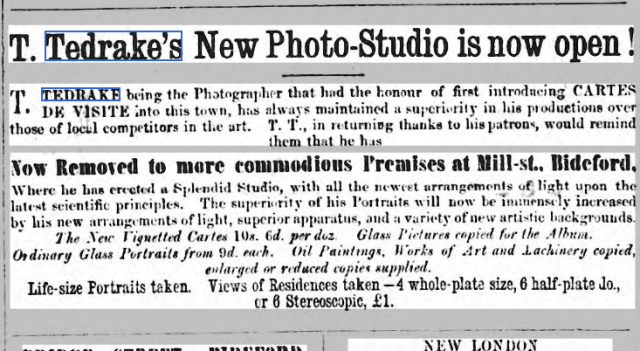
Tedrake's original photographic business was started in Meddon St and in 1863 he moved to Mill Street. He suffered a setback in 1873 when a stove caused a fire. The photographic studio was a wooden structure at the back of his shop which had been waterproofed with tar on the outside so it burned fiercely and the building was completely destroyed.

Examples of his photographs are:

Tedrake photograph

T Tedrake  photograph

A new photo-studio is opened:

Thomas Tedrake Bideford2

The 1871 Census identifies Thomas’s profession as...

Read More

Beacon light to shine forth

1874

Hartland Point Lighthouse

Designed by Sir James Douglass, construction began on Hartland lighthouse in November 1873 by contractor Mr Levi Yerward under the supervision of resident engineer Henry Norris. 
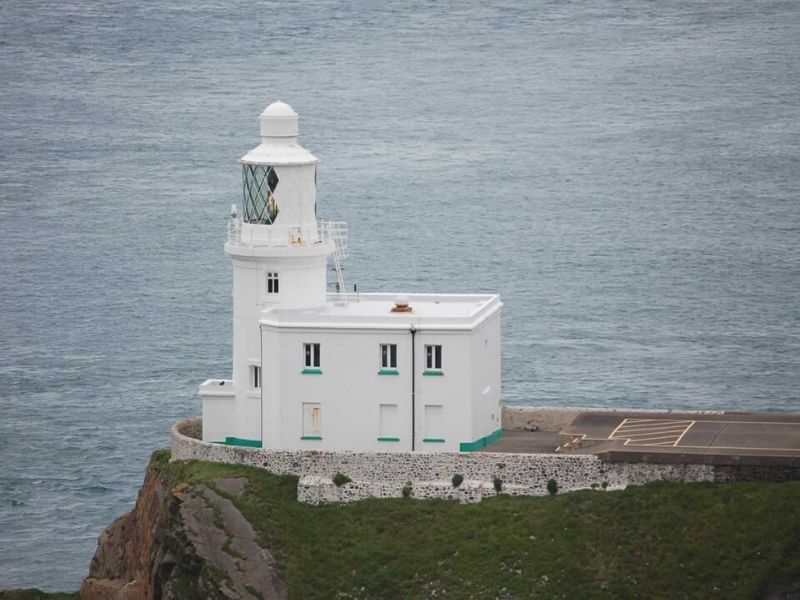
Hartland Lighthouse Patrick Tubby

Photograph courtesy of Patrick Tubby 

North Devon Gazette dated 21 June 1870 - 'A lighthouse is about to be erected near Hartland Point.'

North Devon Journal 23 June 1870 - 'Proposed new lighthouse at Hartland Point – The necessity of a lighthouse at Hartland Point has more than once being strongly urged, frequent wrecks occurring on that iron-bound coast. Sometime since negotiations were entered into for the purchase of piece of land for the construction of a lighthouse near Hartland Point. On Friday it is stated these negotiations were brought to a satisfactory termination, and it is reported that the work of constructing the lighthouse will shortly commence.'
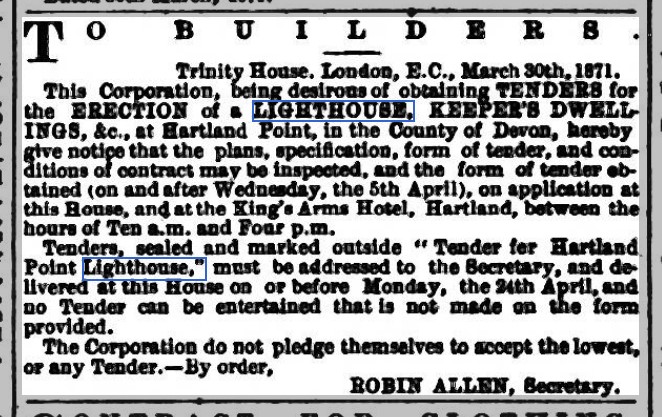
4.4.1871 Western Morning News tenders

4 April 1871 - Western Morning News 

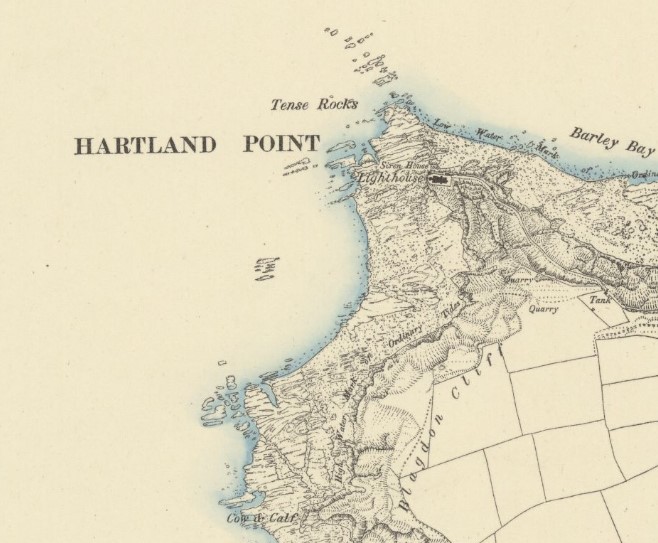
1885 Ordnance Survey Map Hartland Lighthouse

1885 Ordance Survey Map 

From The Hartland Chronicle, July 1905, the following

...
Read More

Used by Max Factor

Booklet produced by the Archive

The History of a Unique Local Industry

Until its closure in 1969, Bideford Black, as it is most generally known, was a mining and manufacturing industry unique to North Devon and possibly in the world; utilising a local mineral deposit, a range of black colouring pigments was produced for use in such widely diversified end-uses as paints, paper, cement, rubber reinforcing and even cosmetics. The mineral in question was related to anthracite, known in Devon as culm, a form of coal which for centuries had been mined as a fuel. Most of the literature on the subject refers to this activity including, unfortunately, a considerable confusion of terminology as one finds materials interchangeably described as coal, anthracite, culm or mineral black without any clear or consistent distinction between them. In the following pages the description ‘culm’ will be confined to the form of solid anthracite used as fuel, and the term ‘mineral black’ to the related but quite different pasty or...

Read More

Saxon battles in North Devon

Booklet produced by the Archive

Introduction

Northam lies in a quiet corner of the North Devon coast occupying a vantage point overlooking the confluence of the Rivers Taw and Torridge and protected from the wild Atlantic by Bideford Bay.

Northam's neighbour Appledore originally known as Tawmutha in Old English, provides beach front anchorages suitable for shallow draught vessels to be hauled out of the channel.

Can this little known village of Northam together with its neighbour, Appledore, have been pivotal in two battles: one securing the rebuilding of the power of Wessex and one signifying its end? 

The two battles are firstly the defeat of Hubba (Ubba) the Dane by the men of Devonshire described in the “Anglo Saxon Chronicles” in 878 during the reign of Alfred the Great which will be investigated in Part 2.

Almost two hundred years later the second battle in 1069 also mentioned in the “Anglo Saxon Chronicles” is a raid by the sons of Harold Godwinson following the Conquest of England by William of Normandy which...

Read More

Atlantic Racquet Centre

A small local Club

The history of the Club (with many thanks to Peter Colwill)

The Origins

The Club was formed in July 1946 by a group of friends and enthusiasts who had formerly played on a ‘pay and play’ basis on the Council owned courts in Golf Links Road, Westward Ho! Agreements with Northam Urban District Council were held leasing the courts for various lengths of time ranging from one to three years. Time limits on court, and always having to leave a court for the use of the public, meant that membership was restricted to 70 senior and 25 junior members. This situation was not satisfactory, and the general consensus of opinion of members was that, should ever the opportunity arise, the Club would make intensive efforts to prepare a development scheme for the future of the Club.
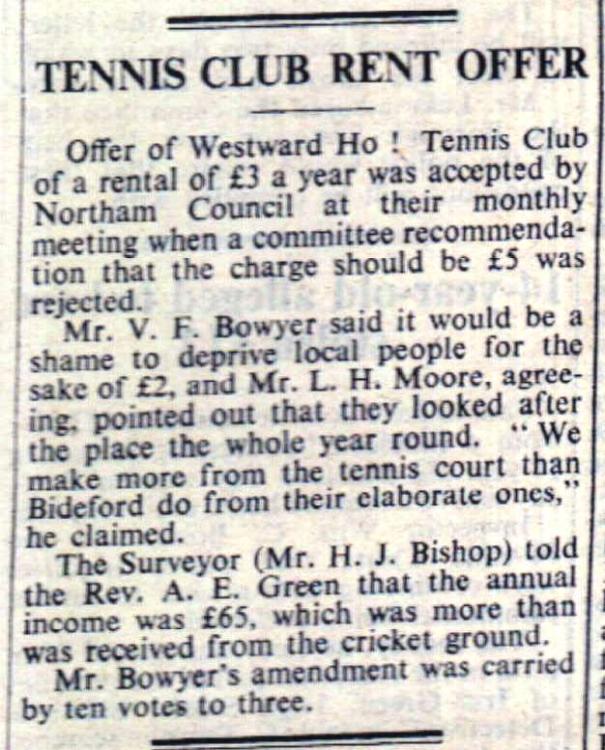
1959 WHo Tennis Club

1959 article

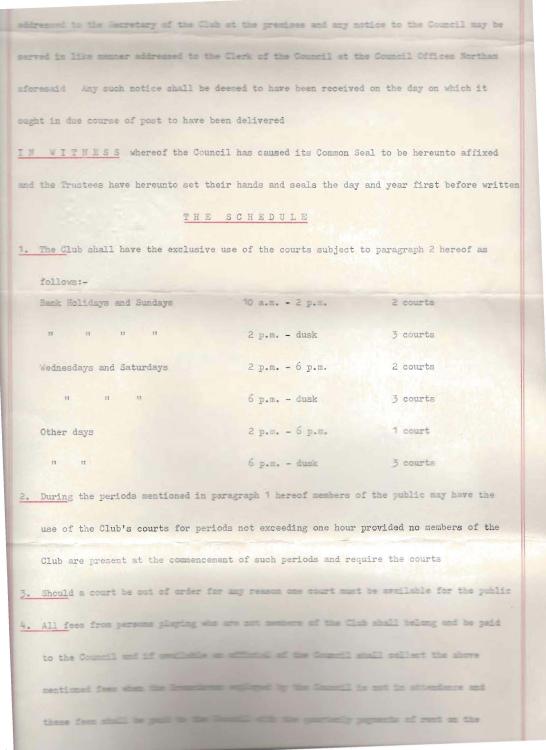
27.1.1970 NUDC Agreement

27 January 1970 agreement with Urban District Council of Northam

Success!

An article dated 23 July 1954 details "By their victory at Saunton over Rock Park Club, Barnstaple, Westward Ho! Tennis Club retained

...
Read More

North Devon at war

1944

D Day – 6 June 1944

The Normandy landings were the landing operations and associated airborne operations on Tuesday, 6 June 1944 of the Allied invasion of Normandy in Operation Overlord during World War II. Codenamed Operation Neptune and often referred to as D-Day, the operation began the liberation of France (and later western Europe) and laid the foundations of the Allied victory on the Western Front.

The amphibious landings were preceded by extensive aerial and naval bombardment and an airborne assault—the landing of 24,000 AmericanBritish, and Canadian airborne troops shortly after midnight. Allied infantry and armoured divisions began landing on the coast of France at 06:30. The target 50-mile (80 km) stretch of the Normandy coast was divided into five sectors: Utah, Omaha, Gold, Juno and Sword.

The 5th and 7th Battalions The Devonshire Regiment fought in North West Europe, with the 12th Battalion training and fighting as airborne troops, and landing in Normandy in

...
Read More

Within Northam's jurisdiction

improve the lungs of Bideford

Commerating a Golden Jubilee

Bideford's Park is a favourite spot for Bidefordians who are pleased to hear that visitors admire it. The flower beds are invariably a mass of bloom throughout the spring, summer and autumn season at at once catch the eye. But read on to find out how the Park came into existence.
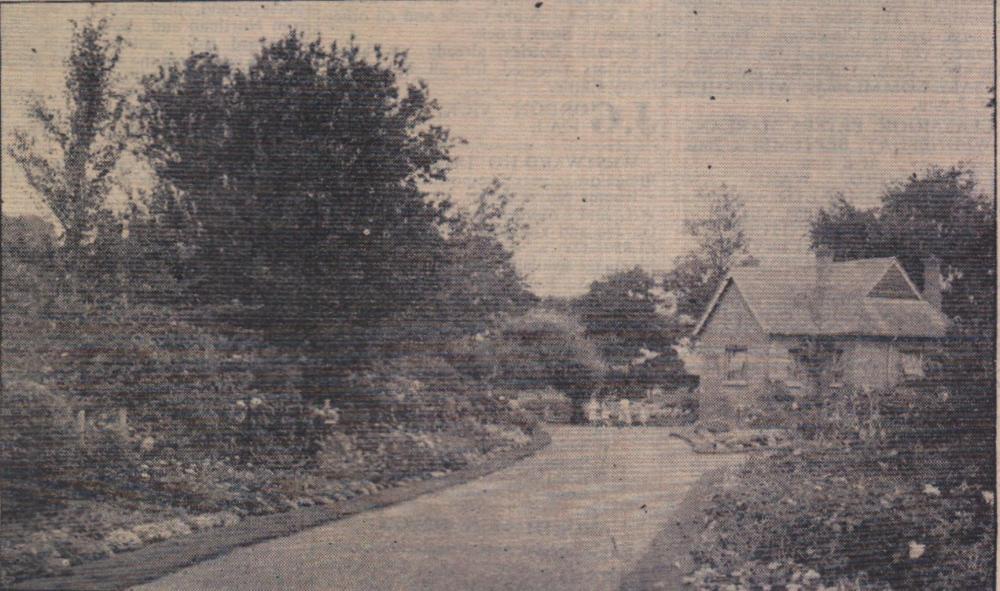
Victoria Park flowers 

In September 1886 at a meeting of Bideford Town Council, the "first business was to receive the report of the Committee respecting the suggested purchase of the marshes adjoining the Pill. The report was to the effect that the Committee were of opinion that it was desirable to open up negotiation with Major Hogg and Captain Molesworth to inquire if they would sell, for public purposes their respective marshes, or such portions as might be agreed upon. The Committee also recommended that nothing be at present done to the flood-hatch, but the Surveyor watch it." 
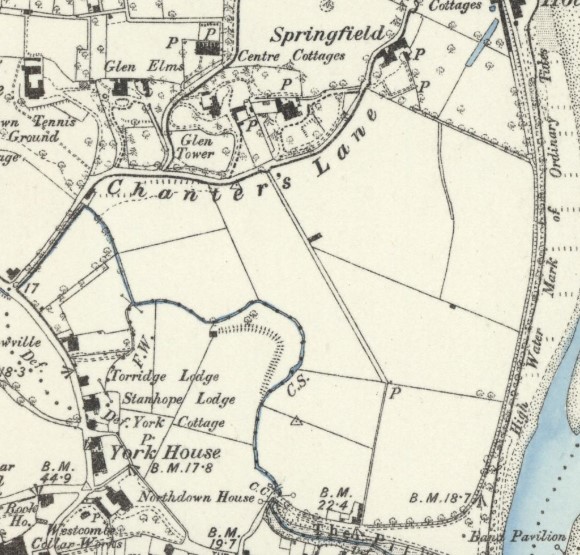
1886 Map

1886 Map

Queen Victoria was crowned in 1837, and in 1887 councillors decided to take steps to commemorate her Golden Jubilee

...
Read More

Tithe Maps

And What it Can Tell Us

The 1838 Tithe map and Tithe Apportionment Book for Northam, Appledore & Westward Ho!

When researching family, property and community history we often turn to maps to show how things were. Early in the nineteenth century a series of maps covering the whole of England and Wales were produced and they can be used to find out who owned the land, who occupied it, what it was used for the size of the field and the rent payable. These maps were the Tithe Commutation Maps.

What were Tithes?

Tithes were a tax which had been in place since the Middle Ages where a tenth of all produce and profits of labour were paid to the Church. At first it was the intention that these tithes should pay for the upkeep of the clergy and to help to provide for the sick and the poor. After hundreds of years the tax had become separated from these good intentions and in 1836 an Act of Parliament was passed to reform the system and change it to a tax payment based on the prevailing price of...

Read More

The Battle of the Somme 1916

The Battle of the Somme – 1 July–18 November 1916

At the outbreak of the First World War, the Devonshire Regiment had 6 battalions - 2 regular; 1 Special Reserve, and 3 Territorials. Combining with 2 Devon Yeomanry regiments, they eventually formed 24 battalions, and 1 single company. Ten battalions of the Devon Regiment fought on a number of fronts – North Russia, Italy, Egypt, Macedonia, Palestine, Salonika, Mesopotamia, Belgium and France. Records detail that more than 6,000 Regular and Territorial men were killed and approximately 18,000 injured. The Devonshire Regiment won sixty new battle honours, 2 Victoria Crosses and over 1,250 other gallantry awards and mentions in Despatches.

The Battle of the Somme (the Somme Offensive) was fought by the British Empire and French Third Republic armies against the German Empire, and took place between 1 July-18 November 1916 – 141 days. As implied in the name, the battle took place on both sides of the River Somme in France. At the end of...

Read More

United Services Proprietary College 1874-1903

Westward Ho!

Kipling Terrace

The Foundation of the United Services College

The founding of the United Services Proprietary College Limited, at Westward Ho! was a reflection on the strains and stresses of Victorian society of the time. Army officers were considered to be members of the upper crust yet their salaries did not stretch far enough to allow them to send their sons to the ‘Great’ Public Schools, unless of course, they possessed a private income to supplement their army pay. 

The need for a school, where the sons of officers in both the forces could be given a thorough education at a reasonably moderate cost, and from whence their entry into the Woolwich or Sandhurst Academies could be ensured, led to the foundation of the United Services College, as it became known, by the United Services Institution. The funding of an establishment of this sort was also an attempt to eliminate the necessity of the officers sending their sons to ‘Crammers’, after they had left school. These ‘Crammers’

...
Read More

Bridgeland Street, Bideford, Devon

Bridgeland Street is in the town of Bideford, measuring approximately 201 metres long

There is only one street named Bridgeland Street making it unique in Great Britain.

The following information is from Bideford Bridge Trust – its reports on the condition of the several properties in the street …. At a monthly meeting of the Trustees held in the Bridge Hall on June 25 1890.
1 Bridgeland St

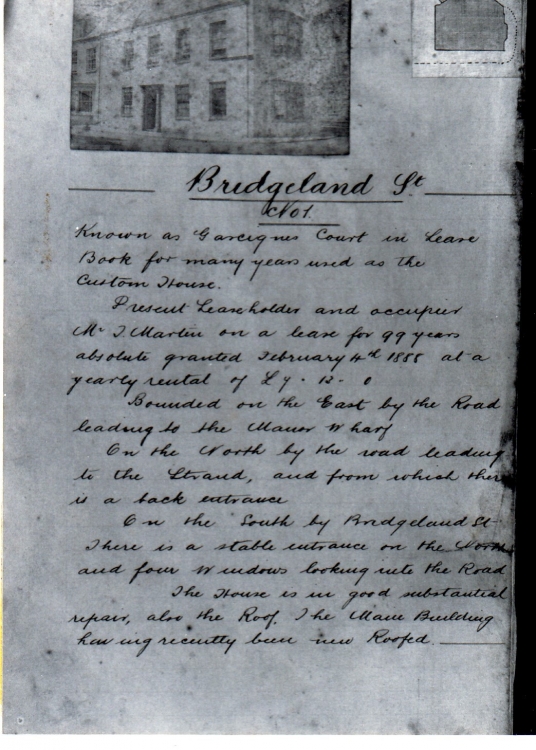
1 Bridgeland Street

Known as Garcignes Court in Lease Book, for many years used as the Custom House.

Present leaseholders and occupier Mr T(Thomas) Martin on a lease for 99 years absolute granted February 4th 1888 at a yearly rental of £9 12s 0d.

Bounded on the East by the road leading to the Manor Wharf. On the north by the road leading to the Strand, and from which there is a back entrance. On the south, by Bridgeland St. There is a stable entrance on the north.and four windows looking ..the road.

The house is in good substantial repair, also the roof. The main building having recently been new roofed.
2 Bridgeland Street

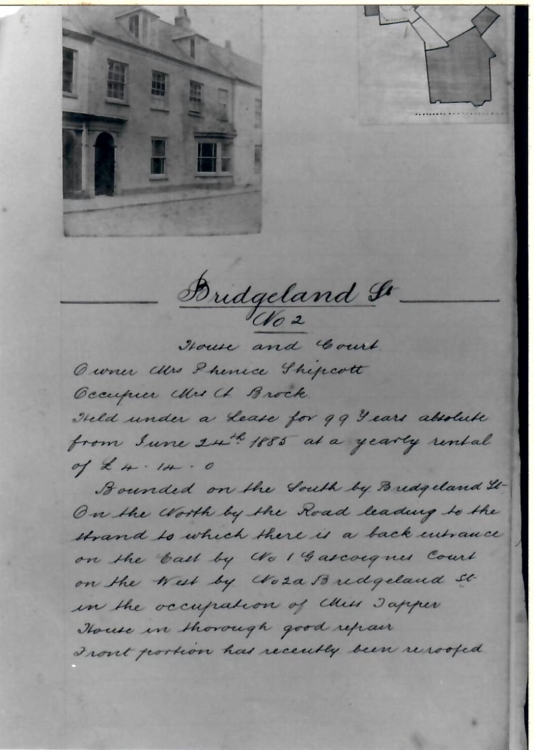
2

...
Read More

1918-2018

Eliza Honey 'before her time'

Why did women need the vote? Fight for emancipation

1856 – Eliza Honey, a widow aged 25 and with a 5-month old baby, took on the running of ‘The Bideford Weekly Gazette and Devon and Cornwall Advertiser’.

1859 – 1st female doctor is registered

When parliamentary reform was being debated in 1867, John Stuart Mill proposed an amendment that would have given the vote to women on the same terms as men but it was rejected by 194 votes to 73.

1869 – women who pay property tax can vote in some elections
1878 – London University allows women to graduate
1881/82 – Married women can keep inherited property and wages
1885 – Age of consent raised to 16
1895 – 1st female dentist qualifies in Scotland
1910 - Committee to discuss female suffrage formed by sympathetic male Members of Parliament; their failure to make progress leads to violent protests

Women cannot vote in general elections
Women cannot graduate from Oxford or Cambridge
Women cannot be police officers, lawyers, jurors
Men can divorce...

Read More

Bilbie Bells

1770

Early days

We believe that Northam Church had bells as early as the first half of the 16th century.

In 1549 most of the bells in Devon and Cornwall were dismantled as a punishment after the Prayer Book Rebellion. However the bells were not taken away as a 1553 inventory lists four bells in the tower, probably without their clappers. West Country bells were allowed to ring again from 1553 when Mary became Queen.

In 1562 an account was rendered “for the casting of our two bells”. It would seem that no attempt was made to rehang the original four bells as an amount of bell metal was sold in both 1578 and 1584.

The church accounts occasionally record payments to ringers for marking special occasions. In 1586 12d was paid for marking the anniversary of the accession of Queen Elizabeth 1st. In 1590 £5 was paid out for the recasting of a bell and purchase of a clapper. Also in this year another 459lbs of bell metal was sold. In 1592 John Harris was paid 12d for a day’s work on the bells,...

Read More

History of Bideford Grammar School

17c-1930s

A HISTORY OF BIDEFORD GRAMMAR SCHOOL
BY

MORRIS MARPLES
M.A.(OXON.), F.R.G.S.
Headmaster of Bideford Grammar School 1931-37

WARREN AND SON LIMITED
THE WYKEHAM PRESS, WINCHESTER
1937
MADE AND PRINTED IN GREAT BRITAIN
BY WARREN AND SON LIMITED
HIGH STREET, WINCHESTER

PREFACE

THIS small volume is the outcome of five and a half years during which much of my thought and energy was devoted to the Bideford Grammar School of to-day. Inevitably I became curious about the Bideford Grammar School of yesterday; and yet it was very difficult to find out anything about the past. The standard histories of the town were content with a few vague and (as afterwards proved) not always accurate statements, and it was generally felt that beyond this there was nothing more to be known. Investigation however, showed that much information could be had for the searching, in old leases and other documents, in minute books and records of all kinds, and in the pages of the newspapers. Towards the end of 1936 the idea...

Read More

World War 1

1914-1918

World War 1:

The Bideford & District Community Archive Centenary display will be at the following locations:

FULL DISPLAY:
St Margaret’s Church, Northam : Friday 26th October – Wednesday 7th November

PART DISPLAY:
Church, Westward Ho! : Wednesday 7th November – Sunday 11th November

If you are unable to see the exhibition at either of these locations you are welcome to visit the Archive offices in Windmill Lane. Our opening times are: Monday – Wednesday; 9.30 am – 1.00pm

----------------------------------------------------------------------------------------------------------------------------------

When thinking about, and planning for, the centenary exhibition I felt it needed to be approaching events by starting from the stories in our local paper, the Bideford Gazette; then researching further from there. To support me, I found a wealth of information from two local sources:

• Peter Griffey’s website, ‘Northam Remembered’ (www.northamremembered.org) and,
• Ian Arnold & Richard...

Read More