
The History of a Unique Local Industry
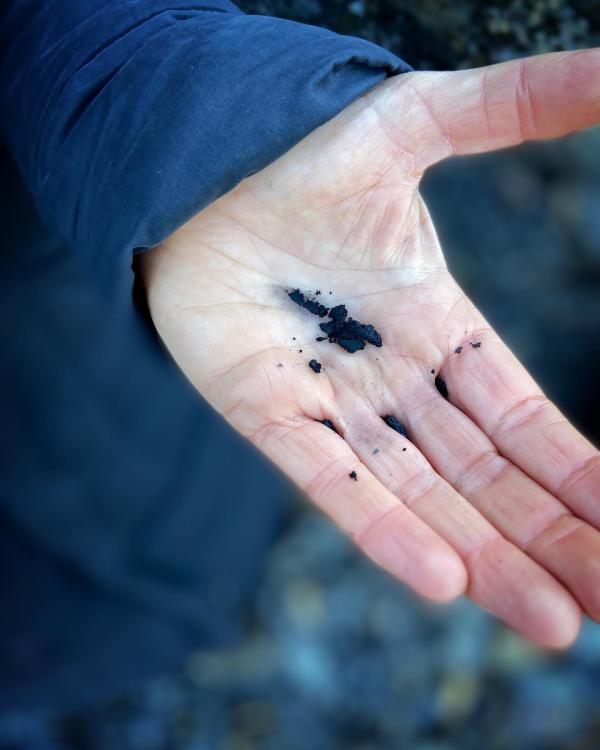
Until its closure in 1969, Bideford Black, as it is most generally known, was a mining and manufacturing industry unique to North Devon and possibly in the world; utilising a local mineral deposit, a range of black colouring pigments was produced for use in such widely diversified end-uses as paints, paper, cement, rubber reinforcing and even cosmetics. The mineral in question was related to anthracite, known in Devon as culm, a form of coal which for centuries had been mined as a fuel. Most of the literature on the subject refers to this activity including, unfortunately, a considerable confusion of terminology as one finds materials interchangeably described as coal, anthracite, culm or mineral black without any clear or consistent distinction between them. In the following pages the description ‘culm’ will be confined to the form of solid anthracite used as fuel, and the term ‘mineral black’ to the related but quite different pasty or clay-like material used as a pigment.
Like culm, mineral black was mined and used as a pigment at least as far back as the 13th century when it was found to be an ideal base for paint used on the keels of the old sailing ships and was certainly used in the time of Nelson. Originally, the mineral was simply dug out in lumps, dried and ground to a powder, the form in which it was known as Bideford Black (later known as Fillablack). With the ever-changing needs of industry, later manufacturing refinements were introduced to produce two other varieties known as Biddiblack and Bettablack respectively.
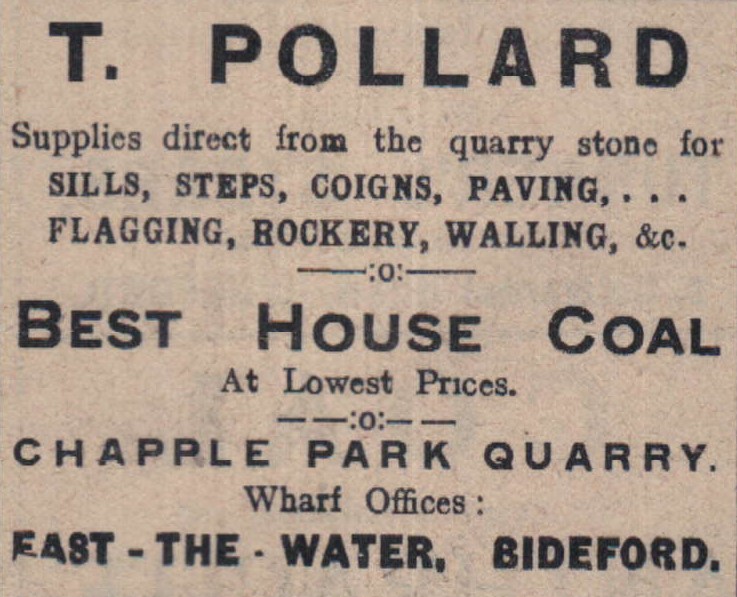
All of the known workings of mineral black were in and around Bideford; one near the grounds of the old Rectory at the top of High Street and the others in East-the-Water where the main manufacture was eventually established at Chapel (also spelled Chapple) Park Mine. For a time, the business flourished and at one point employed over fifty men but, as so often happens over the course of time, the changing needs of customers and the introduction of new technology with cheaper and better products all combined to make the old mineral black obsolete and eventually it was abandoned.

If you wish to know more about this subject, the Bideford & District Community Archive has a booklet (revised 2023) which can be purchased.